Adminn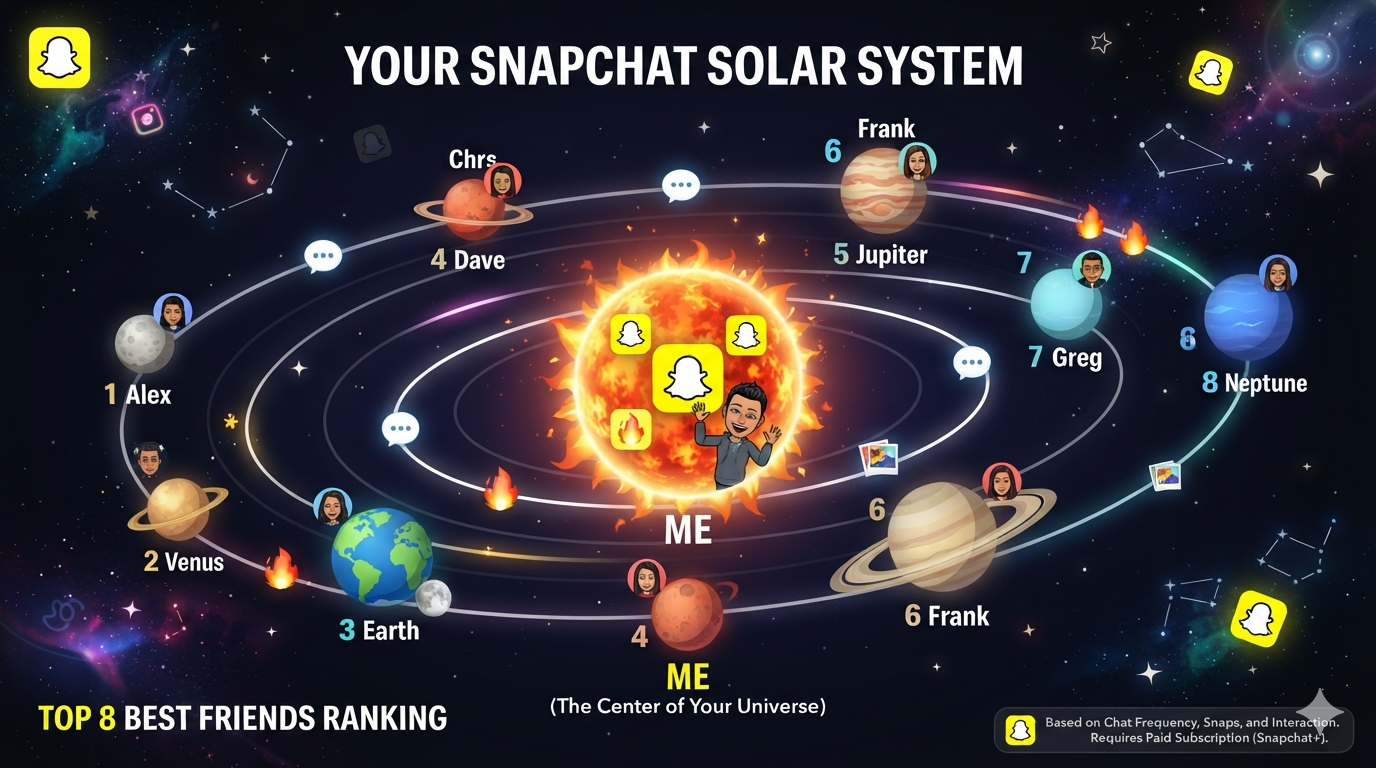
Have you ever wondered who your absolute best friend is on social media? Snapchat has a fun feature that turns your friend list into a mini solar system. When people search for terms like snapchatplanetsorders.com, they usually want to know how this system arranges their closest pals. This special tool comes with a paid subscription. It looks at how often you send chats, snaps, and pictures back and forth. Think of yourself as the glowing sun in the center of your own digital universe. Your top eight friends turn into planets that orbit right around you. It adds a playful and competitive twist to everyday texting with your buddies. Let us dive deep into how these celestial rankings work and what they truly mean for your friendships.
What is Snapchat Plus and Why Does It Matter?
Before you can see any space badges, you need to understand the platform behind them. Snapchat Plus is a monthly membership service. It gives users early access to cool, experimental features before anyone else gets to try them. The Friend Solar System is one of the most popular perks included in this package. Without this upgrade, you will not see the planet icons next to usernames. Many users look up info regarding snapchatplanetsorders.com to figure out how to unlock these hidden profile extras. Signing up is very simple through the mobile app settings. Once active, it silently tracks your daily digital habits in the background. It calculates your interaction scores without you needing to do any heavy math or manual sorting.
Understanding the True Order of the Planets
The arrangement of the planets follows the exact same sequence as our real solar system. However, there is a big social twist. Instead of giant balls of rock and gas floating in deep space, they represent real human relationships. The cosmic lineup starts closest to the sun and moves outward into the dark void. People searching for snapchatplanetsorders.com often get confused about which position means what. Mercury sits right at the front as the very first planet. Neptune sits far away at the very end of the list. Every single spot tells a unique story about how much time you spend talking to that specific person. Knowing this order helps you see who holds your top friendship spots at a single glance.
Mercury: Your Number One Best Friend
Mercury is the closest planet to the sun in real life. In the app, it marks your absolute favorite person. Users interested in snapchatplanetsorders.com want to earn this glowing red badge with their besties. This spot means you exchange more snaps, pictures, and quick text messages with them than with anyone else. You likely share a massive daily streak that goes on for weeks or months. It is the ultimate badge of honor for close friendship. If you see Mercury on a profile, it proves those two users talk almost every single day without fail. It takes real dedication and constant communication to keep this top spot locked down securely.
Venus, Earth, and Mars: The Inner Circle
Moving outward, we find the next three rocky worlds in our solar system chain. Venus takes the second slot for your second-closest buddy. Earth takes the third spot, and Mars holds down the fourth position. When checking details around snapchatplanetsorders.com, you will notice these friends form your core inner circle. You talk to them very often, even if your streak is slightly shorter than your top Mercury friend. They are the people you send funny selfies to during class or share random updates with throughout your afternoon. Their icons often feature lovely pink, blue, or red hearts to show strong bonds. These connections feel stable, happy, and deeply rooted in daily fun.
Jupiter, Saturn, Uranus, and Neptune: The Outer Giants
The remaining four planets represent positions five through eight on your friend list. Jupiter is fifth, Saturn is sixth, Uranus is seventh, and Neptune is eighth. People exploring snapchatplanetsorders.com realize these outer planets mean the friendship is still important, just a bit less active. You might chat a few times a week rather than every single hour. Neptune is especially funny because it sits at the very edge of your solar system. Being someone’s Neptune means you are still in their top eight, but your chats happen less frequently. These spots can shift easily if you suddenly start sending more snaps to an outer planet friend.
How Snapchat Calculates Your Planet Rankings
Algorithms run quietly behind the scenes to decide who gets which celestial body. Queries related to snapchatplanetsorders.com highlight how much users want transparency from these hidden rules. The system heavily weighs the sheer volume of snaps sent back and forth. Regular text chats also matter, but picture messages carry more scoring power. Mutual interactions play a massive role too. If you send photos to someone who never replies, they will not stay on your planet list for long. The score relies on a two-way street of active engagement. Because habits change over time, your planetary layout can shuffle around from week to week.
Step-by-Step Guide to Viewing Your Friend System
Checking your cosmic standing is actually very easy once you know where to look. Many web users searching for snapchatplanetsorders.com get stuck trying to find the right buttons. First, make sure your mobile app is fully updated to the latest version. Open up your profile screen and look for the special membership badge. Next, tap on a friend’s profile page to open their main info hub. Look for the special Friend Solar System badge or best friends icon. Tapping that badge will instantly reveal what planet you represent in their universe. It is a fun party trick to check during lunch breaks with your school friends or group chats.
Snapchat Planets Summary Table
| Planet Name | Friendship Rank | Interaction Level | Typical Emoji Style |
| Mercury | 1st Place | Highest daily interaction | Red planet, red hearts |
| Venus | 2nd Place | Very close and regular | Golden brown, mixed hearts |
| Earth | 3rd Place | Loyal and steady bond | Blue & green, moon symbol |
| Mars | 4th Place | Strong everyday connection | Red-orange, purple hearts |
| Jupiter | 5th Place | Fun and upbeat energy | Large orange with stripes |
| Saturn | 6th Place | Meaningful periodic chats | Yellow-orange with ring |
| Uranus | 7th Place | Casual friendly presence | Green tone with yellow stars |
| Neptune | 8th Place | Outer edge of top list | Distant blue sphere |
Why Friend Rankings Change Over Time
Friendships change in real life, and your digital solar system reflects those shifts. People searching for snapchatplanetsorders.com often panic when their planet drops down a slot. There is no need to worry because this movement is totally normal. If you stop talking to someone for a few days while chatting heavily with a new classmate, your ranks will swap. The algorithm recalculates constantly to keep things accurate. Think of it as a living reflection of your current social life rather than a permanent grade. Embracing these changes makes using the feature much more lighthearted and fun for everyone involved.
Common Misconceptions About the Solar System Feature
Many myths float around the internet regarding how these space features operate. Some users think buying a subscription lets you manually pick your favorite planets. That is completely false. The app automates everything based purely on math and snap counts. Other folks believe that being someone’s Neptune means they dislike you. In reality, making the top eight at all means you are still one of their most valued contacts on the entire application. Clearing up these small rumors helps everyone enjoy the app without stressing over minor digital metrics or internet myths.
Frequently Asked Questions (FAQs)
What do Snapchat planets mean?
They represent your friendship rankings with your top eight contacts based on how frequently you exchange snaps and chats.
Can I choose my own planet positions manually?
No, the application automatically calculates your planet order using an internal algorithm based on your messaging habits.
Why did my planet rank drop suddenly?
Your ranking drops if you decrease your messaging frequency with that person or if you start talking more frequently with someone else.
Do I need a paid subscription to see planets?
Yes, this specific Friend Solar System feature is currently exclusive to active Snapchat Plus members.
What is the highest planet rank you can get?
Mercury is the highest rank, representing your absolute number one best friend in that user’s universe.
Does everyone on my friends list have a planet?
No, only your top eight closest friends occupy planetary slots in your solar system model.
Conclusion and Call to Action
Snapchat planets bring an exciting, gamified layer to how we connect with our favorite people every day. By understanding how the rankings work, you can easily track your digital bonds and see who orbits closest to your world. Why not check your app right now to see what planet your best friend gave you? Drop a comment below with your current planet rank, or share this guide with your besties to see who claims Mercury today!