Adminn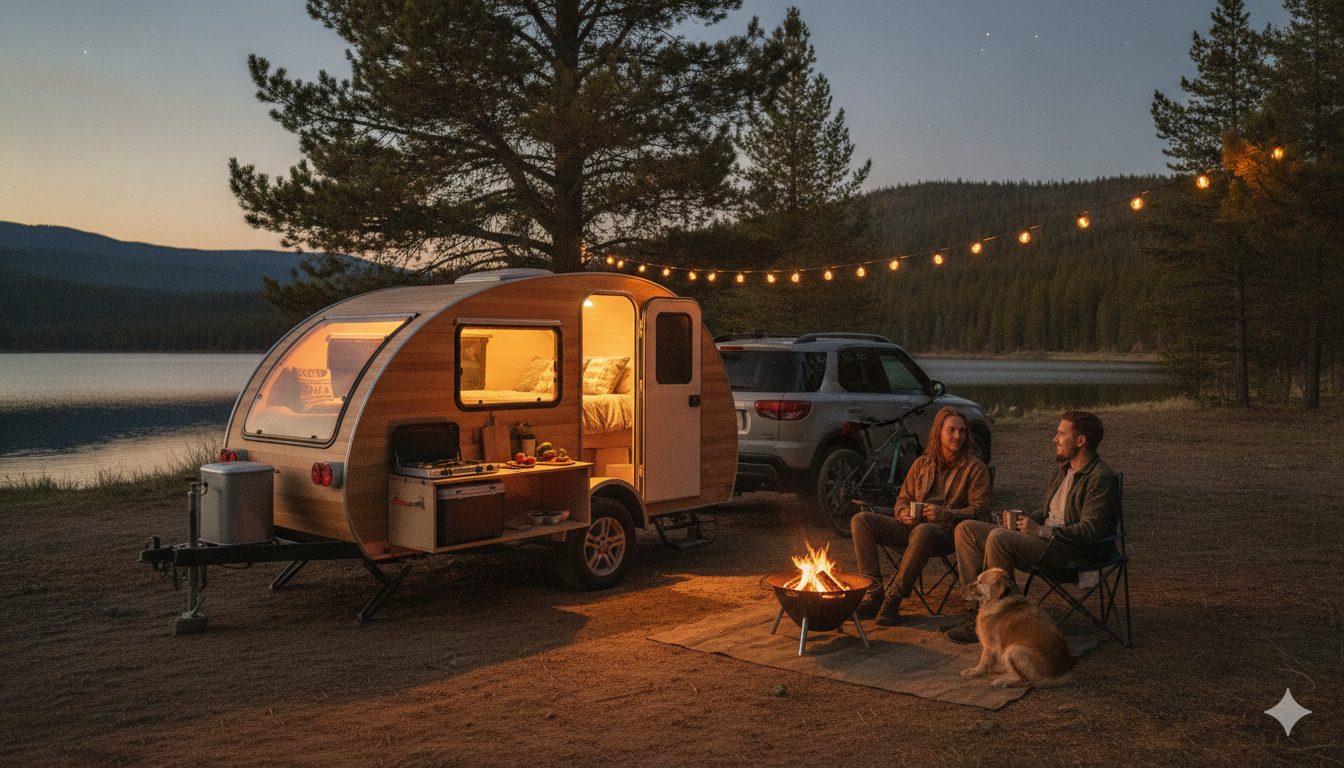
Have you ever dreamed of hitting the open road with your own cozy home on wheels? Many people want to go camping but feel scared of driving a massive, heavy truck. That is exactly why lightweight travel trailers have become the absolute sweet spot for modern camping adventures. These compact rigs give you all the fun of outdoor exploring without the high stress of heavy towing.
When I first started camping, I pulled a giant trailer that made my hands sweat on the steering wheel. Switching to smaller lightweight travel trailers completely changed how I look at road trips. Now, towing feels as natural as regular driving. These trailers are perfect for smaller vehicles like midsize SUVs or half-ton trucks. You do not need to buy a giant commercial truck just to enjoy the great outdoors with your family.
Modern engineering has changed the game for small campers over the past few years. Manufacturers use strong, aerospace-grade aluminum and composite fiberglass shells to build these units. This means you get a super durable home that stays incredibly light on its wheels. You can easily slip into tight state park campsites that reject larger RVs. Plus, you will save a lot of money on fuel while driving down the highway.
10 Top Lightweight Travel Trailers to Consider
| Trailer Model | Dry Weight (lbs) | Best Tow Vehicle | Standout Feature |
| Happier Camper HC1 | ~1,100 lbs | Subaru Outback / Small SUVs | Retro style with modular interior cubes |
| Scamp 13′ Deluxe | ~1,600 lbs | Honda Pilot / Midsize SUVs | Durable fiberglass shell, great resale value |
| Modern Buggy Big Buggy | ~1,950 lbs | Toyota Highlander / Small Trucks | Compact teardrop frame with a full wet bath |
| nuCamp TAB 320 | ~2,050 lbs | Toyota Tacoma / Midsize SUVs | Classic teardrop with an outdoor galley hatch |
| Airstream Basecamp 16 | ~2,650 lbs | Ford F-150 / Full-Size SUVs | Iconic aluminum build made for rugged roads |
| nuCamp TAB 400 | ~2,920 lbs | Toyota 4Runner / Midsize Trucks | Stargazer window and premium lithium power |
| Clipper 15CBH | ~2,894 lbs | Jeep Grand Cherokee / Midsize SUVs | Budget-friendly bunkhouse that sleeps four |
| Forest River R-Pod 171 | ~2,937 lbs | Chevy Colorado / Small Trucks | Aerodynamic shape with great interior space |
| Rockwood Geo Pro G20BS | ~3,200 lbs | Half-Ton Trucks / Large SUVs | Compact slide-out design with solar power |
| KZ Sportsmen Classic | ~2,800 lbs | Ford Explorer / Midsize SUVs | Traditional floor plan built for young families |
Why Choose a Small Camper Trailer?
Choosing small lightweight travel trailers comes down to freedom and simplicity. When your trailer is small, your whole world gets bigger. You can park in normal parking spots when you stop for lunch. Storage becomes a breeze because many of these units can sit right inside a standard residential garage. You will spend far less time maintaining your rig and more time enjoying nature.
I have noticed that giant trailers often isolate you from the real camping experience. Small lightweight travel trailers encourage you to live outside under the awning while keeping you safe and warm at night. They serve as a comfortable launchpad for hiking, fishing, or sitting by the campfire. If you value experiences over owning massive pieces of plastic, small is the way to go.
Understanding Towing Weights and Ratings
Before you hitch up, you must understand a few basic trailering terms. The most important number is dry weight, which is the weight of the camper empty. You also need to know the Cargo Carrying Capacity (CCC). This tells you how much gear, water, and propane you can safely pack into your unit. Never exceed your vehicle’s maximum tow rating.
Another critical factor is tongue weight, which is the downward pressure on your hitch. Typically, this should be about 10 to 15 percent of the total trailer weight. If you pack too much heavy gear in the very back, the trailer might sway dangerously on the highway. I always recommend using a high-quality weight distribution hitch to keep your ride smooth and level.
The Best Compact Trailers Under 2,000 Pounds
If you drive a smaller crossover or a wagon, you want to stay under 2,000 pounds. Rigs like the Happier Camper HC1 or the Scamp 13′ are perfect choices here. They are so light that you barely feel them behind your car. They use simple designs that focus on a comfortable bed and a basic kitchen setup.
These tiny trailers are excellent choices for solo travelers and minimalist couples. Because they lack massive water tanks and heavy slide-outs, they require very little upkeep. You can easily push them into place by hand on a flat driveway. They offer a giant upgrade over sleeping on the cold ground in a traditional nylon tent.
Top Bunkhouse Options for Small Families
You do not need a massive 30-foot rig to go camping with your kids. Modern lightweight travel trailers include brilliant bunkhouse models like the Clipper 15CBH. These floor plans place small twin beds at one end of the trailer for the children. This gives everyone their own private space without adding extra weight or length.
Using a lightweight bunkhouse means you can still tow with a family SUV. The main bed often converts into a dining table during the daytime to save precious floor space. This setup keeps the family tight-knit while ensuring everyone stays completely dry during a heavy rainstorm. It is an ideal balance for weekend family trips to the lake.
Maximizing Space With Smart Murphy Beds
Space is precious when you are living in a compact camper. That is why manufacturers love using Murphy beds in modern lightweight travel trailers. During the bright daylight hours, the master bed folds right up into the front wall. This hidden bed reveals a comfortable sofa or a spacious dinette underneath it.
When night falls, you simply pull the bed down over the couch in seconds. This smart trick gives you the living room space of a much larger trailer during the day. It also ensures you get a full-size, residential mattress to sleep on at night. It is the ultimate design win for couples who want to stay comfortable without towing a giant box.
Going Off-Grid With Solar and Lithium Power
Boondocking means camping far away from traditional RV parks without any power or water hookups. Many new lightweight travel trailers come straight from the factory ready for these rugged adventures. Models like the nuCamp TAB 400 offer special packages with rugged off-road tires, lifted suspensions, and roof-mounted solar panels.
Having factory-installed lithium batteries means you can run your lights and fans for days without a loud generator. These rugged trailers usually carry smaller water tanks, so you must conserve what you have. If you love exploring quiet national forests and empty deserts, look for a trailer with high ground clearance and solid underbody protection.
The Benefits of Fiberglass Shell Campers
When looking at lightweight travel trailers, you will see many molded fiberglass designs like Scamp and Casita. These trailers are built like two giant bowls bolted together in the middle. Because they have very few seams, they are incredibly resistant to water leaks. Water damage is the number one killer of old RVs, so this is a huge benefit.
Fiberglass trailers also hold their resale value better than almost any other vehicle on the market. They are lightweight, aerodynamic, and very easy to wash and wax. While they can feel a bit cozy inside due to the curved walls, their extreme durability makes them a smart long-term investment for frequent campers.
Essential Kitchen and Bathroom Layouts
Just because a camper is small does not mean you have to skip the luxury of a private bathroom. Many lightweight travel trailers feature an all-in-one wet bath. This means the toilet and the shower share the exact same waterproof room. It saves a massive amount of space while still letting you clean up after a long day of hiking.
Kitchens in these rigs are surprisingly efficient and functional. You usually get a two-burner propane stove, a small refrigerator that runs on multiple power sources, and a deep sink. Some teardrop trailers place the kitchen outside under a rear hatch. This keeps cooking smells out of your sleeping area and lets you enjoy the fresh air.
Buying Tips for First-Time RV Owners
If you are stepping into the RV market for the first time, start small and simple. Go visit an RV dealership and actually walk inside several different lightweight travel trailers. Sit on the cushions, stand in the shower, and lie down on the bed. You need to make sure the ceiling height feels comfortable for your stature.
Never buy a trailer that sits right at your vehicle’s maximum towing capacity. Always leave a safety buffer of at least 20 percent to account for steep hills and strong highway winds. Do not forget to budget for essential accessories like heavy-duty sewer hoses, water pressure regulators, and level blocks. Starting with a manageable setup builds immense driving confidence.
Summary of the Lightweight Trailer Lifestyle
Investing in lightweight travel trailers opens up a wonderful world of easy, stress-free travel. You can hook up your trailer in minutes and head out for a weekend getaway on a whim. These smart rigs offer the perfect blend of modern comfort and outdoor simplicity. They prove that you do not need a giant mansion on wheels to make beautiful memories around the campfire.
Frequently Asked Questions
Can I tow a lightweight travel trailer with a midsize SUV?
Yes, you absolutely can tow many lightweight travel trailers with a properly equipped midsize SUV. Vehicles like the Toyota Highlander or Honda Pilot generally have a towing capacity of 5,000 pounds. This gives you plenty of room to safely pull trailers that weigh under 3,500 pounds empty. Always verify your specific vehicle’s payload and hitch weight limits before buying.
What does the term “dry weight” mean?
Dry weight is the official weight of the trailer as it leaves the factory floor. This measurement does not include the weight of fresh water in the tanks, filled propane cylinders, batteries, or any of your personal camping gear. When calculating your total towing weight, always add at least 1,000 pounds to the dry weight to stay safe.
Do lightweight travel trailers have real bathrooms?
Many modern lightweight travel trailers come equipped with full bathrooms. To save space, they often use a design called a wet bath, where the toilet is located right inside the shower stall. Some slightly larger lightweight models even feature a dry bath, which keeps the shower and toilet completely separate just like your home bathroom.
Are lightweight trailers safe to drive in high winds?
Lightweight trailers are safe to tow in normal conditions, but their lower weight means they can feel gusts of wind more than heavy rigs. To stay safe, always use a sway control bar and a weight distribution hitch. If you encounter severe highway crosswinds, simply slow down your speed or pull over safely until the weather clears up.
Can these small trailers handle freezing winter weather?
Some lightweight travel trailers are built with advanced insulation packages for four-season camping. Look for models that feature heated underbellies, enclosed tanks, and double-pane windows if you plan to camp in freezing temperatures. Standard lightweight models are best suited for spring, summer, and autumn adventures.