Adminn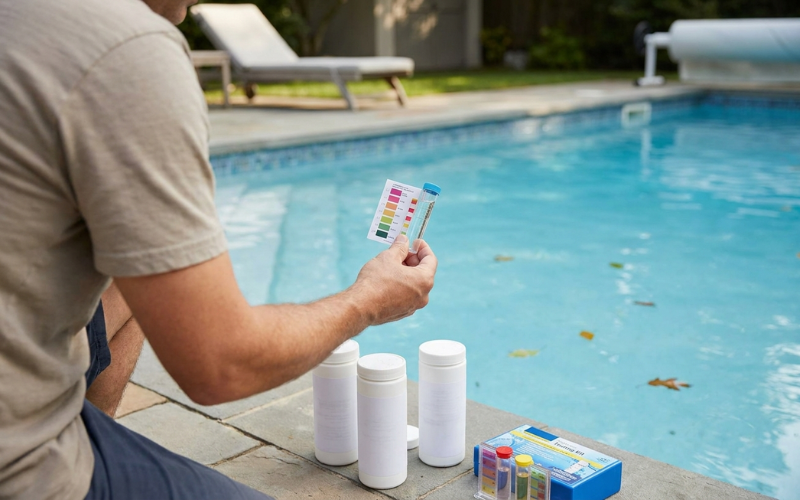
For many pool owners, chlorine is the first chemical they think about when the water starts to look off. The pool may seem a little dull. The water may have been used heavily over the weekend. A recent storm may have changed the way the pool looks. In those moments, many people reach for chlorine right away.
That reaction is understandable, but it is not always the best first step.
Chlorine adjustment should start with testing, not guessing. A pool can look dirty for several reasons, and not all of them mean the sanitizer level is the main problem. If homeowners add chlorine without checking the right numbers first, they may waste product, create new balance problems, or miss the real cause of the issue.
This is why chlorine basics matter so much. Safe and effective pool care is not only about knowing that chlorine is important. It is about knowing what to test before making any change.
Why Testing Matters Before Adding More Chlorine
Many water problems can look similar at first. Cloudy water, dull water, a strong smell, or mild irritation do not always mean the same thing. New pool owners often assume any of these signs must mean “add more chlorine.” Sometimes that is true. Sometimes it is not.
Chlorine Problems and Water Balance Problems Can Look Alike
A pool with low sanitizer may look poor. A pool with high pH may also look poor. A pool with too much debris, weak circulation, or poor filtration can show similar symptoms. If owners respond with chlorine every time, they may end up treating the wrong problem.
Guesswork Usually Creates More Correction Later
When chlorine is added without testing, the result becomes harder to predict. The level may still stay too low. Or it may go too high for what the pool actually needed. Either way, more adjustment usually follows. That makes the routine feel harder than it should.
Start With Free Chlorine
The first number to check is free chlorine. This is the most important chlorine reading for routine pool care because it reflects the sanitizer that is actively available to protect the water.
Free Chlorine Shows What the Pool Can Use Right Now
If free chlorine is low, the pool may need support. If it is already in a workable range, adding more chlorine may not be the correct first move. That is why this reading should come before any decision about dosing.
Free Chlorine Helps Answer the Real Question
Before pool owners ask how much chlorine to add to pool, they need to know whether the pool actually needs more sanitizer first. Free chlorine gives that starting point. Without it, the question is incomplete.
Check Total Chlorine Too
Free chlorine tells an important part of the story, but total chlorine adds more context. The difference between free chlorine and total chlorine can reveal whether some of the chlorine in the water is already tied up and less useful.
This Helps Owners See Whether the Pool Is Under Stress
If the total chlorine number is much different from the free chlorine number, the pool may not be using sanitizer as efficiently as it should. This matters because adding more chlorine without understanding that difference can create confusion.
It Is Better to Read the Whole Situation
A pool is easier to adjust when owners understand not only how much sanitizer is present, but how much of it is truly available to do its job.
Test pH Before Adjusting Sanitizer
This is one of the most overlooked steps. pH does not replace chlorine, but it affects how well chlorine works. If pH is out of range, sanitizer performance may feel weaker than expected even when chlorine is present.
High or Low pH Can Change the Way the Pool Responds
When pH drifts too high, chlorine may become less effective. When pH drops too low, the water may become uncomfortable and harder to balance. In either case, the pool owner may think the sanitizer level is the main issue when the real issue is partly pH.
Chlorine Adjustment Works Better in Balanced Water
That does not mean pH must be perfect before any chlorine is added. It does mean owners should know whether pH is also part of the problem. That makes the next step more accurate and more controlled.
Check Total Alkalinity for Stability
Total alkalinity does not directly sanitize the pool, but it supports stability. It helps keep pH from swinging too quickly. That matters because unstable pH often leads to unstable sanitizer performance.
Low Alkalinity Can Make the Pool Feel Unpredictable
If alkalinity is low, the water may shift more easily after chemical additions, weather changes, or heavy use. In those conditions, chlorine adjustments may feel less consistent because the water itself is less stable.
Testing Alkalinity Helps Explain Repeating Problems
If homeowners feel like chlorine levels never hold well or balance seems to drift too quickly, alkalinity may be one of the hidden reasons. Testing it helps create a clearer picture before adding more product.
Consider Stabilizer in Outdoor Pools
For outdoor pools, stabilizer is another important factor. Sunlight breaks chlorine down, sometimes faster than beginners expect. This means a pool can lose sanitizer quickly even after a correct chlorine adjustment.
Stabilizer Affects How Long Chlorine Lasts
If stabilizer is too low, chlorine may burn off too fast in sunny conditions. The owner may think the pool “needs more chlorine” when the better explanation is that the sanitizer is not being protected well enough.
Too Much Stabilizer Can Also Complicate Things
This is why stabilizer should not be ignored. Too little can shorten chlorine life. Too much can create other balancing challenges. Testing helps prevent both extremes.
Look at the Pool Conditions, Not Just the Numbers
Water test results matter most, but they should be read alongside what is happening in the pool. A clean-looking pool and a storm-filled pool do not ask the same thing from chlorine.
Recent Events Can Change Sanitizer Demand
Homeowners should consider:
- heavy swimmer use
- recent storms
- high heat
- pollen or debris load
- cloudy water
- algae suspicion
- pool opening after downtime
These conditions can increase chlorine demand and change how an adjustment should be understood.
The Same Reading Can Mean Different Things in Different Contexts
A chlorine level that feels acceptable in a clean and steady pool may not feel as strong after a weekend of heavy use and debris exposure. That is why test numbers and pool conditions should be read together.
Do Not Forget Circulation and Filtration
Sometimes the chlorine level is not the only issue. If the pool is not circulating well or the filter is dirty, the water may still look poor even after sanitizer is adjusted.
A Pool Needs More Than Chemicals Alone
Good circulation helps distribute chlorine through the water. Filtration helps remove the debris and fine particles that chlorine does not physically remove. If either of these is underperforming, the owner may blame sanitizer levels when the system needs broader attention.
Testing Helps Prevent Misplaced Corrections
When homeowners test first, they are less likely to use chlorine as the answer to every problem. That makes the whole pool care routine more efficient.
A Simple Testing Order Makes Chlorine Decisions Easier
Pool care feels easier when homeowners follow the same basic order every time.
A Practical Routine Looks Like This
- Test free chlorine
- Check total chlorine
- Check pH
- Review total alkalinity
- Consider stabilizer if the pool is outdoors
- Think about recent pool conditions
- Inspect circulation and filtration if needed
- Then decide whether chlorine adjustment is truly necessary
This routine reduces guesswork and makes chemical changes more deliberate.
Final Thoughts
Pool chlorine basics are not only about knowing that chlorine matters. They are about knowing what to test before changing sanitizer levels. Free chlorine should come first. Total chlorine adds context. pH and alkalinity help explain how stable and effective the water really is. Stabilizer matters in outdoor pools. Pool conditions and circulation matter too.
Once homeowners understand that order, chlorine adjustment becomes much less stressful. Instead of reacting to cloudy water or a vague feeling that something is wrong, they can test, interpret, and respond with more confidence.
That is the real value of chlorine basics. They turn sanitizer adjustment from guesswork into a routine that is safer, simpler, and easier to manage over time.